
Jewelscapes: Color by Number
LoveColoring GameCasual
5.0174.00 Reviews
- Version
- 1.0.7
- Installs
- 100.00K
- Age Rating
- Everyone
Screenshots
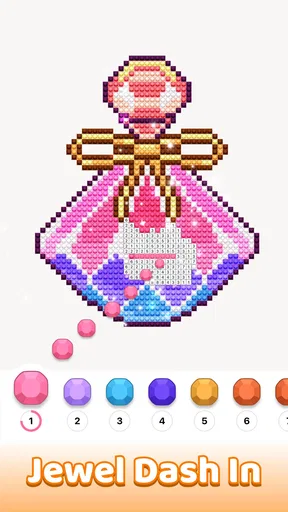
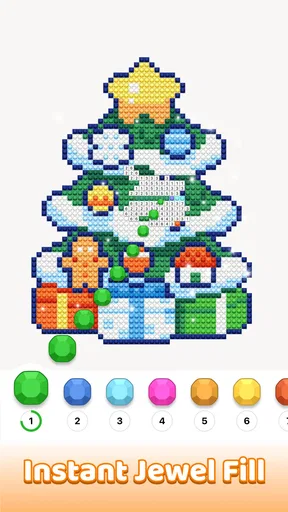
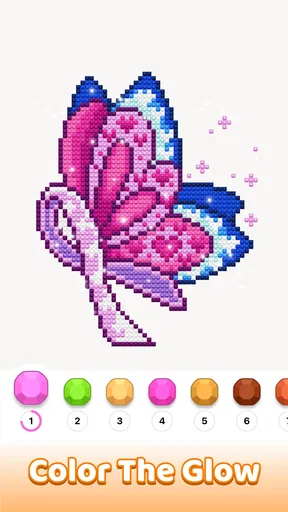
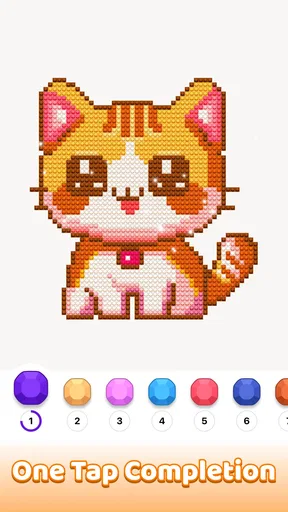
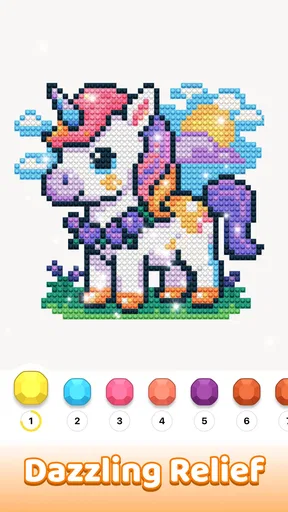
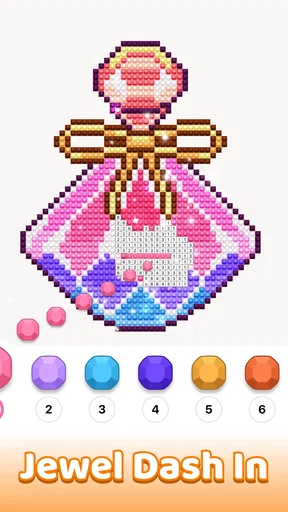
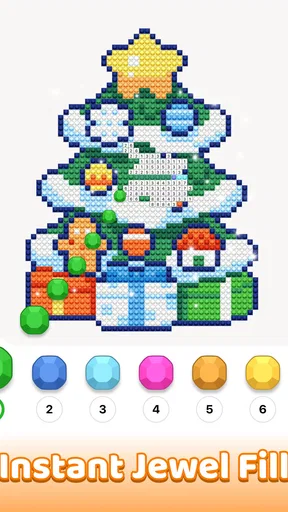
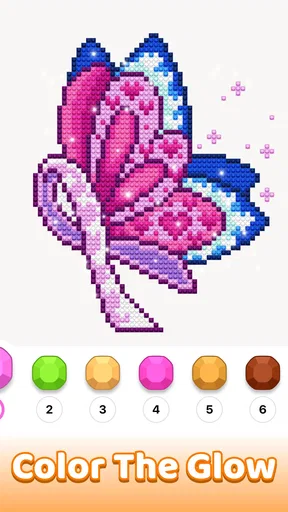
Our Review of Jewelscapes: Color by Number
 Analysis by Appyee
I spent time with Jewelscapes: Color by Number, a casual coloring game from LoveColoring Game that turns numbered pictures into small, jewel-like mosaics. The basic appeal is easy to understand: choose a color, find its matching number, and gradually replace a blank pattern with a finished image. It is the kind of game I can open without preparing myself for a challenge, and that makes it a natural fit for quiet breaks rather than competitive sessions.
What makes this particular title worth discussing is the combination of coloring and jewel imagery. The work is more structured than freehand drawing, but it still gives me the satisfying feeling of building something piece by piece. I would recommend it to someone who likes orderly, low-pressure tasks and wants a casual pastime that can be picked up briefly. I would not recommend it to a player looking for strategy, story, fast reactions, or a strong sense of competition.
How the coloring loop feels in everyday use
The central routine is deliberately simple. I look at the numbered artwork, select the corresponding color, and fill the matching sections. That simplicity is a strength when I am tired or distracted, because there is little to learn before I can begin. Instead of asking me to remember a complicated control scheme, the game keeps my attention on visual matching and gradual completion.
The jewel theme gives the pictures a slightly different identity from ordinary color-by-number books. The finished result is meant to feel bright and decorative, so the appeal comes from watching a dull-looking pattern become a polished image. I found that the most enjoyable moments were not necessarily the final reveal. They were the middle stages, when enough of the picture had appeared to make its subject recognizable while small uncolored areas still gave me something to do.
This is also a useful game for short sessions. If I have a few minutes while waiting for an appointment or winding down before bed, I can work on a picture without needing to remember a plot or recover from a failed attempt. That makes it friendlier than many casual games that use short sessions but still create pressure through timers, lives, or repeated losses.
There is a trade-off, though. The same predictable structure that makes the game relaxing can become repetitive. Every picture is approached through the same broad process, so players who need changing mechanics may feel that the novelty fades. The game works best when I treat each image as a calming activity, not as a system that will keep surprising me.
Who gets the most from the format
I see three especially good audiences here. First, people who enjoy coloring but prefer guidance instead of a blank canvas. Second, players who like completion-based tasks and the visual satisfaction of clearing a pattern. Third, anyone who wants a gentle mobile activity that does not demand fast fingers or deep concentration from the first second.
It can also suit families because the content rating is Everyone. That rating makes the game broadly approachable, although I would still judge whether the controls and small numbered areas are comfortable for a particular child. Fine details can be more tiring than they look, especially on a small phone screen. A larger display may make the experience easier on the eyes and reduce accidental taps.
I would skip it if my main reason for downloading a game were competition. There is no reason to approach this as a test of skill against other people. Someone who prefers match-three battles, racing, tactical puzzles, or action games will probably find the pace too quiet. Even within coloring games, a freeform drawing app may be a better choice for a person who wants creative control rather than guided completion.
Progress without the usual pressure
One of the strongest parts of this kind of design is that progress is visible. A partly completed image gives me an immediate sense of movement, even when I have only worked for a short time. That is different from a long role-playing game, where a brief session may not produce a meaningful change. Here, a few carefully filled sections can make the picture look noticeably more finished.
For a better experience, I would avoid treating every remaining patch as an obligation. When a picture contains many small areas, chasing total completion can turn a relaxing activity into a task. I prefer to stop when my attention drops and return later. The numbered structure makes it easy to resume mentally because the next action is usually obvious.
A useful personal routine is to begin with the larger, easier sections. They reveal the image quickly and reduce the visual clutter of the unfinished pattern. After that, I move to the smaller areas only if I still feel like continuing. This is not a special shortcut or a hidden mechanic; it is simply a way to manage attention. It helps me keep the game restful instead of staring at every tiny space from the beginning.
Another practical tip is to use the game as a transition activity. I can play for a little while after work to separate work thoughts from evening plans, or use it before sleep when a more stimulating game would keep me alert. The important distinction is that the value comes from the rhythm of selecting and filling, not from chasing a high score.
Spending, purchases, and the question of fairness
The game is free to download, which lowers the barrier to trying it. It also includes in-app purchases listed at $9.99 per item. That is the spending fact I would keep in mind before installing: the initial download does not require payment, but optional purchases are part of the experience.
For me, the fair way to approach it is to decide in advance whether I am willing to spend anything. If I only want a free coloring break, I would use the game without assuming that every desirable convenience or piece of content must be available at no cost. If I am comfortable paying for an optional item, I would still treat each purchase as a deliberate choice rather than a small impulse made repeatedly.
I do not see a reason to judge the game as competitive or unfair in the way I would judge a multiplayer title. A coloring activity does not need to provide equal combat strength or a balanced ranking system. The more relevant fairness question is whether spending changes access to the relaxing core in a way that makes the free experience feel unnecessarily restricted. I would test the free portion first and only consider a purchase after I know that I genuinely enjoy the basic loop.
That approach also protects the game’s main benefit. If I start measuring the experience by how quickly I can unlock or finish everything, the calm quality becomes less important. The sensible value test is simple: does the free experience already give me enough pleasant activity, and would a purchase add something I personally expect to use? If the answer to the first question is no, paying more is unlikely to solve the underlying mismatch.
How it compares with other casual coloring choices
Compared with a physical coloring book, this game is more convenient because the colors and numbered structure are already on the screen. I do not need pencils, a table, or storage space. The downside is that the experience depends on a phone or tablet, and the screen can make tiny areas less comfortable than a printed page.
Compared with a freehand drawing app, it offers less personal expression but more certainty. I do not need to decide what to draw or worry about whether my technique is good. The game gives me a defined image and a clear next step. That is exactly why I find it soothing, but it is also why an artist looking for unrestricted tools should choose something else.
Compared with puzzle games that use timers or limited attempts, this format feels gentler. The objective is completion rather than survival or optimization. That makes it suitable for players who dislike losing progress. On the other hand, people who enjoy solving a new logical problem each round may find the coloring process too familiar once the first attraction of the jewel presentation wears off.
What I would check before committing time or money
The game requires Android 8.0 or later, so compatibility matters before downloading it to an older device. On supported hardware, I would also consider the screen size. The experience depends on recognizing numbers and tapping particular areas, so a compact phone may be less comfortable than a larger handset or tablet.
The current version is 1.0.7, and the game has reached over one hundred thousand installs. Its average rating is 5.0 from around seven thousand ratings, with 174 written reviews. Those figures suggest strong reception, but I would still treat them as a starting point rather than a guarantee that the style will suit me. Ratings can tell me that many people enjoyed the game; they cannot replace trying the actual coloring loop for myself.
The age rating of Everyone is reassuring for broad accessibility, but it does not answer every practical question a parent might have. I would let a child try the basic activity and observe whether the small details are manageable. I would also keep purchase decisions under adult control, particularly because individual in-app items are priced at $9.99.
For adults, the more important unknown is personal tolerance for repetition. The game’s idea is clear from the first session, so it does not need a long learning period. That is good if I want immediate relaxation, but it means the decision is mostly about whether I enjoy repeating the same type of visual task across different pictures.
My trust verdict after weighing the trade-offs
I come away viewing Jewelscapes as a focused casual game rather than a broad entertainment package. It knows what it wants to be: a guided coloring activity with jewel-inspired imagery, a low-pressure pace, and visible progress. I appreciate that clarity. I can recommend it to a friend who wants something quiet to do with their hands while listening to music or taking a break from more demanding apps.
My recommendation comes with two conditions. First, try the free experience before considering any purchase. The game is free to start, but the presence of $9.99 in-app items means I would not install it with an assumption that every part of the experience will remain cost-free. Second, choose it for relaxation, not challenge. It is a poor substitute for a competitive game and a limited substitute for a drawing tool.
The strongest practical use case is a short, repeatable reset: I open it after a busy day, complete a manageable portion of a picture, and stop before the activity becomes a chore. The strongest reason to skip it is equally clear: if I need constant variety, strategic decisions, or social competition, the numbered coloring loop will not provide enough depth.
Overall, I think LoveColoring Game has made a sensible choice by keeping the focus narrow. The game’s high average rating and growing install base make it easy to understand why people are trying it, but my own verdict rests on the experience rather than the numbers. It is best when the act of filling a picture is the reward. If that sounds appealing, this free casual game is worth a calm trial; if not, another type of mobile pastime will be a better use of your time.
Verdict
Strengths of Jewelscapes: Color by Number
- Relaxing gameplay suited to short, stress-free sessions.
- Large variety of colorful jewel-themed pictures to complete.
- Simple controls make it accessible for most age groups.
- Satisfying visual effects when sections are filled correctly.
- Offline play may be convenient when traveling or without Wi‑Fi.
Limitations of Jewelscapes: Color by Number
- Some artwork and features may require watching ads or spending currency.
- Repeated tapping can become tedious on larger, more detailed pictures.
- Mistakes may be frustrating when similarly colored jewels look alike.
- Progress and rewards can feel slow without regular ad viewing.
- The game may use noticeable storage as its picture library expands.
Other Releases by LoveColoring Game
View All
Fairytale Color by number game
Board4.9

Tangle Color by Number Book
Board4.9

Country Farm Coloring Book
Board4.9

Pop Color - Paint by number
Board4.8
Similar Picks in This Category
View All
My Talking Angela
Outfit7 Limited4.2

My Talking Tom
Outfit7 Limited4.3

Pou
Zakeh4.2

My Talking Tom 2: Pet Game
Outfit7 Limited4.3

Candy Crush Saga
King4.6

Bridge Race
Supersonic Studios LTD4.1
Frequently Asked Questions
What is Jewelscapes: Color by Number?
Jewelscapes: Color by Number is a relaxing coloring game that combines numbered artwork with sparkling jewel-style visuals. You select colors or gems according to the numbers shown on each section of an image, gradually completing pictures with landscapes, animals, patterns, and other decorative designs. It is designed for casual play and does not require advanced drawing skills.
How does the coloring gameplay work?
The game provides an image divided into numbered areas. Each number corresponds to a particular color, and you tap the matching sections to fill them in. Depending on the design, you may be able to zoom in for smaller details and use helpful tools when locating difficult areas. Completing sections is simple, making the game suitable for short sessions or longer, more relaxing play.
Can I play Jewelscapes: Color by Number offline?
Many coloring features may be available without a constant internet connection, especially after the necessary artwork and game resources have been loaded. However, online access can still be required for downloading new pictures, receiving updates, viewing advertisements, synchronizing progress, or using other connected features. Availability may vary by device version, so it is best to test the game offline after installation.
Is Jewelscapes: Color by Number free to download and play?
Jewelscapes: Color by Number is generally offered as a free download, allowing users to begin coloring without purchasing the application. Like many free mobile games, it may include advertisements, optional in-app purchases, or paid tools and content. Before downloading, check the store listing for current pricing details, available subscriptions, and whether purchases are protected by your device’s parental controls.
Is Jewelscapes: Color by Number suitable for children?
The simple tap-to-color controls and non-competitive gameplay can make Jewelscapes: Color by Number appealing to children as well as adults. Nevertheless, parents should review the game’s age rating, advertising, privacy information, and in-app purchase options before allowing independent use. If children are playing, parental controls and purchase restrictions are recommended, particularly when the device is connected to a payment account.
Play our best games!


